Technology
Electrolysis technology for effective disinfection
Our electrolysis technology produces Neuthox® from just salt, water and electricity. The water-based disinfectant contains hypochlorous acid (HOCl), which is highly effective against harmful microorganisms and helps remove and prevent biofilm in water systems.

Salt
Water
Electricity
Neuthox
How our electrolysis technology works
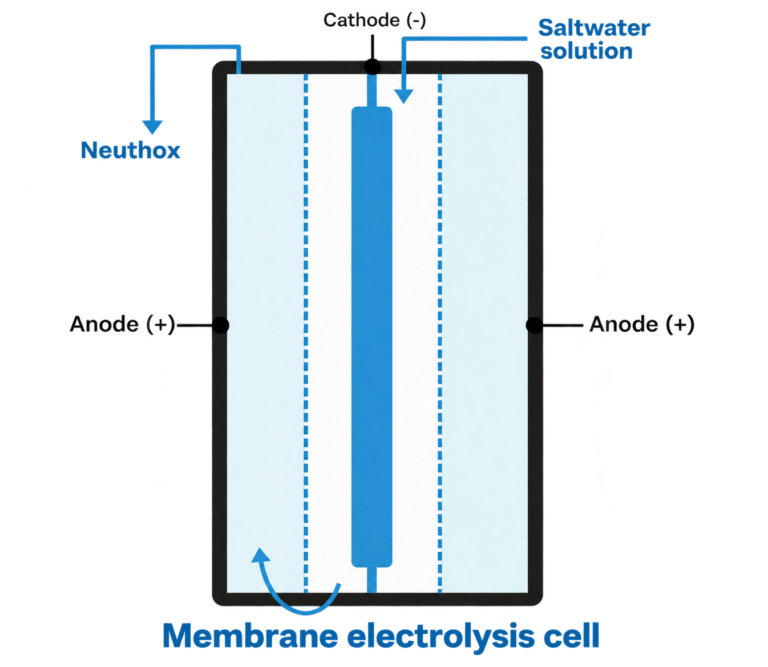
The production of Neuthox is based on electrochemical activation (ECA), an electrolysis process in which a saltwater solution passes through a membrane electrolysis cell. Electrochemical reactions in the cell convert the saltwater solution into Neuthox, which contains HOCl.
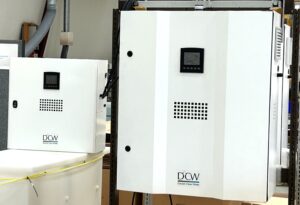
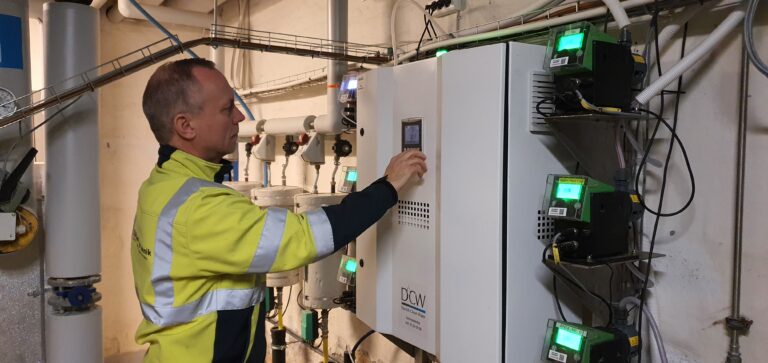
Neuthox can be produced directly on site in our DCW units and automatically dosed into water systems.
Did you know?
HOCl is also naturally produced by our immune system to help fight bacteria and other microorganisms.
Why hypochlorous acid is highly effective
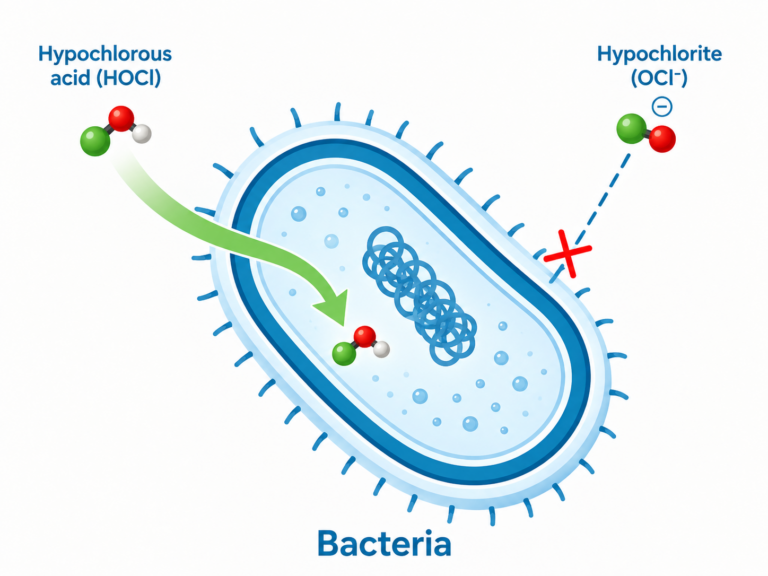
Hypochlorous acid (HOCl) is a form of free chlorine that is highly effective for disinfection. HOCl has a neutral charge, while bacterial cell surfaces typically carry a negative charge. Because HOCl is neutral, it can easily pass through bacterial cell walls and membranes. In comparison, the hypochlorite ion (OCl⁻), commonly found in conventional bleach solutions, is negatively charged and therefore less able to penetrate the bacterial cell surface.
HOCl rapidly reacts with essential proteins and other cell components, disrupting vital functions and killing bacteria. Its broad antimicrobial activity also makes it effective against viruses, fungi and other microorganisms. This high efficiency enables effective disinfection at low concentrations.
Studies have reported HOCl to be 70–80 times as effective at killing bacteria as the hypochlorite ion (OCl⁻) under comparable conditions.
Biofilm removal and prevention
Neuthox also removes and prevents biofilm – the slimy layer that can build up on surfaces inside water systems. Biofilm creates a protective environment where bacteria multiply, making it a major source of recurring bacterial growth. As long as biofilm remains in the system, bacteria can return to the water after disinfection.
Neuthox is highly effective against biofilm, breaking it down and removing the bacteria within it. Where heavy biofilm is present, a higher initial concentration can be used to accelerate the cleaning process. Once the biofilm has been reduced, continuous dosing at the normal operating concentration helps prevent new build-up and supports clean systems and stable water hygiene.
Biofilm build-up
Biofilm removed
Example: How fast can Legionella multiply?
Under favourable temperature conditions, Legionella can grow exponentially. Research-based growth curves indicate a doubling time of around 12 hours at temperatures near 40 °C. At that rate, a population of 500 could increase to around 8,000 in just two days.
FAQ about our electrolysis technology
Explore more

Want to know how our electrolysis technology fits your needs?
Reach out to discuss how our technology can help you achieve safe and effective disinfection.