Hospital secures safe water for patients
Patients at a regional hospital in Denmark can safely use the domestic water thanks to DCW units that remove harmful Legionella bacteria while also reducing energy use.
When the regional hospital in Horsens switched from its own heating system to district heating in 2014, the technical team faced a challenge in continuing to keep bacteria under control in the hospital’s domestic hot water.
“Previously, we controlled Legionella bacteria through temperature flushing by increasing the water temperature to 72°C or more once a week to kill bacteria in the pipes. When the district heating supply temperature was 55°C and therefore too low to eliminate the bacteria, we had to think differently,” says Allan Larsen, utilities technician at the regional hospital in Horsens
From temperature flushing to a DCW unit
The hospital installed a DCW unit that uses electrolysis with salt and water to produce the disinfectant Neuthox, which is dosed into the domestic hot water.
“Thanks to the unit, we no longer need temperature flushing and can avoid increasing the temperature to such high levels at regular intervals. The pipes and water are now consistently clean, without us having to do anything other than test the water and confirm that the bacteria are under control,” says Allan Larsen.
The DCW unit has since been supplemented by three more. There are now two units at the hospital in Horsens, one at the health centre in Skanderborg and one at the lifestyle centre in Brædstrup, which is also part of the hospital organisation.
Ongoing testing confirms the effect
The technical team continuously monitors the buildings’ energy use and bacterial levels in the domestic water via the regional hospital’s central control system.
“Our experience with the DCW units has been good and is supported by our ongoing water measurements, which show that the water is clean. When we take samples from the taps and detect Neuthox in the water, we know that the domestic water is protected against harmful bacteria throughout the system because Neuthox is so effective,” says Torben Hansen, plumbing technician at the regional hospital in Horsens.
Tests carried out by the environmental laboratory Eurofins Miljø Vand confirm that the water contains fewer than 100 CFU (colony-forming units) per litre, which is very low. The recommended threshold for Legionella is 1,000 CFU.
Clean water is critical for patients
The cleanliness of the domestic water receives particular attention because it is used by vulnerable patients at the hospital.
“Patients in intensive care and other highly vulnerable patients are treated at the hospital. Naturally, they must not be exposed to dangerous bacteria, for example in the water. No one should become more ill in hospital, so clean and safe water is an especially important focus for us,” emphasises Allan Larsen.
Key benefits of the DCW solution
Energy savings as an added benefit
Because the DCW units effectively keep bacteria under control in the water, the hospital’s technical team has lowered the district heating supply temperature and is saving energy while maintaining clean water.
“Because the water no longer needs to be very hot to avoid bacteria, we have reduced the temperature in the pipes from 55°C to 52°C and save energy in this way. The patients do not notice any difference – the level of comfort is the same when they shower or wash their hands,” says Torben Hansen.
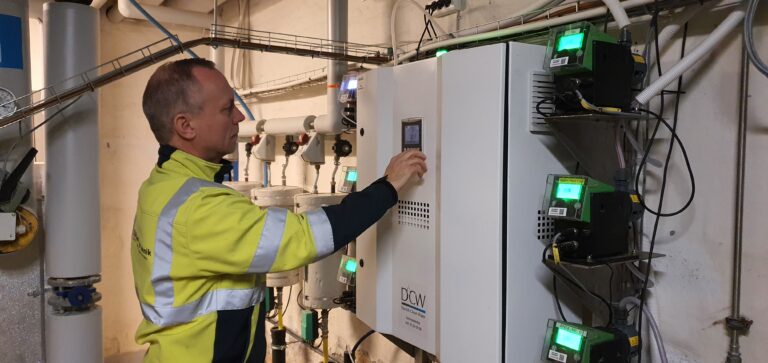
Plumbing technician Torben Hansen checks one of the DCW units.
Explore the solution
Domestic water
Control Legionella and biofilm in domestic water systems in buildings.
Explore domestic water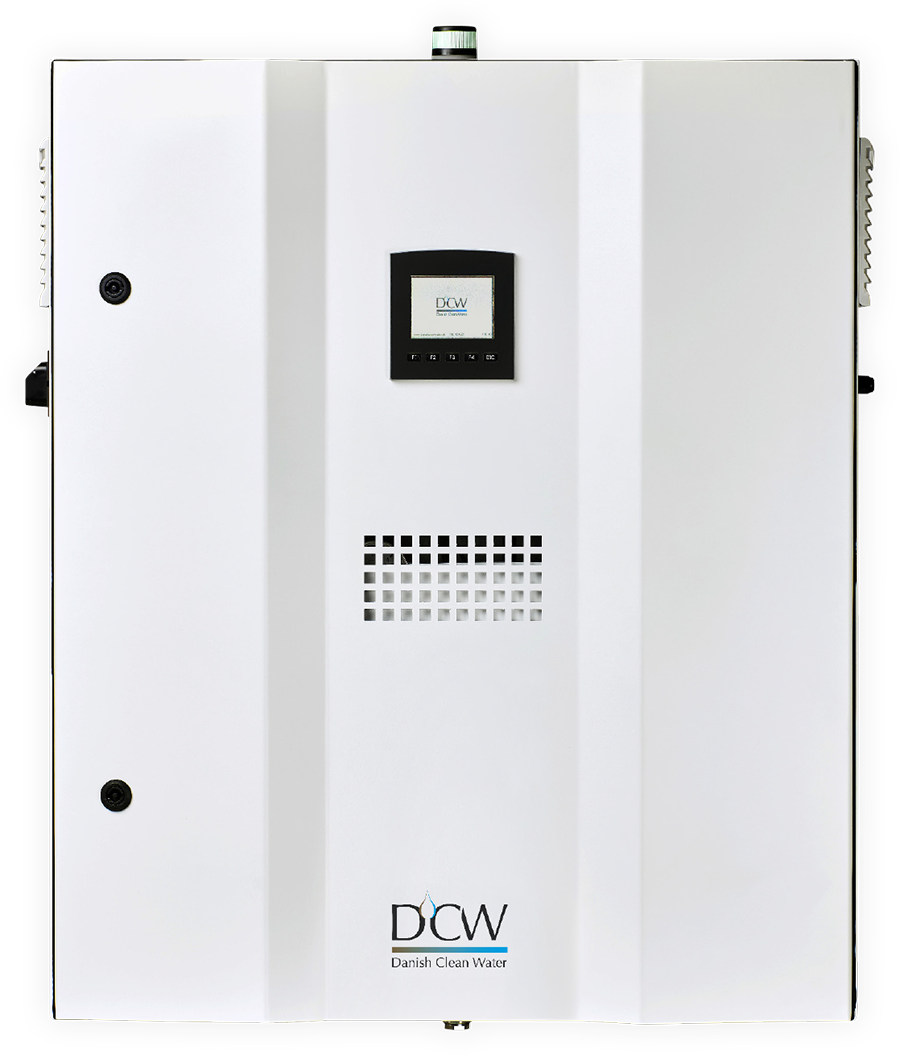
Need a safe and effective disinfection solution?
Get in touch to discuss your needs.